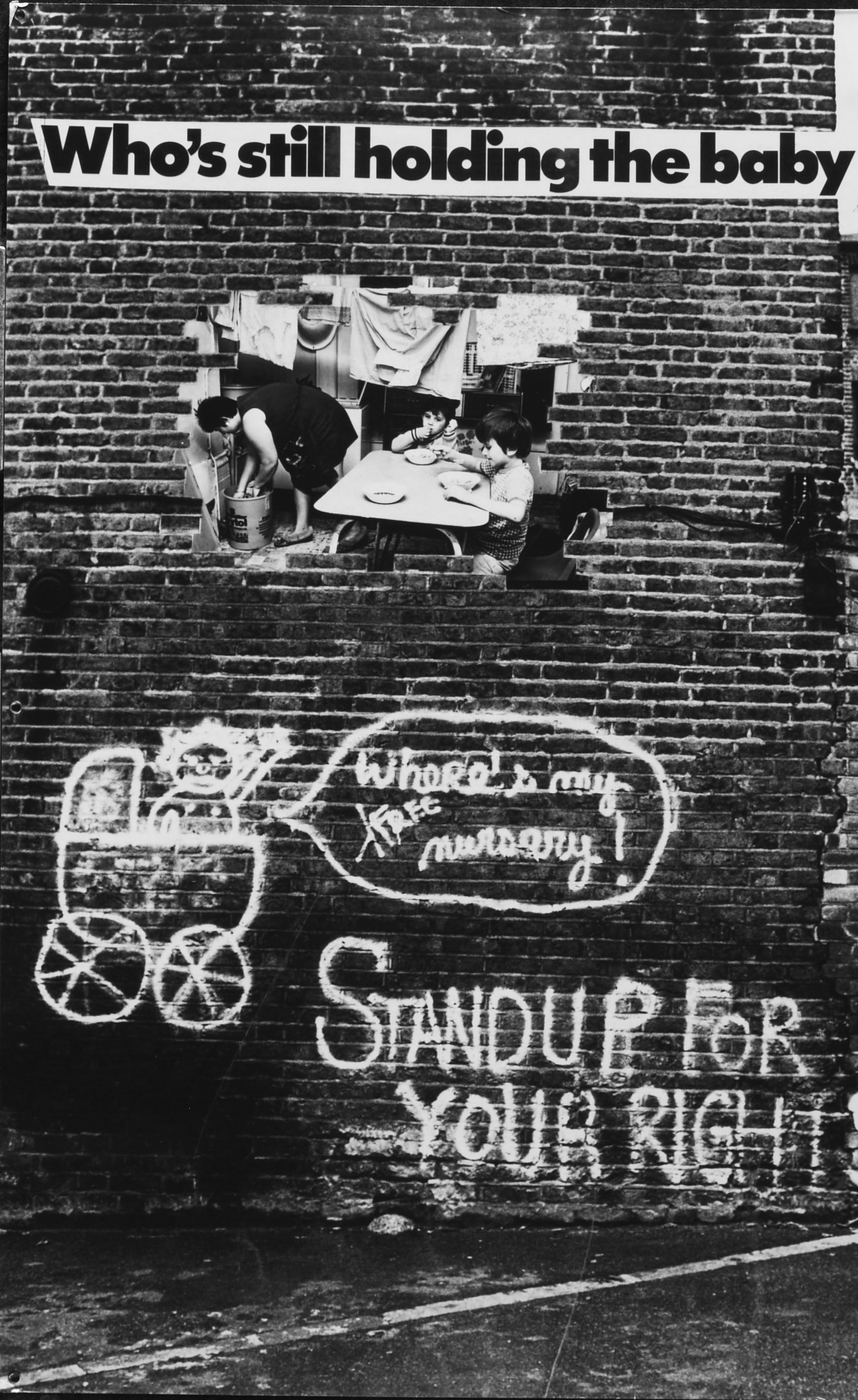
Who’s holding the baby? 1978

Photomontage - includes a photo of a wall with grafitti reading "Where's my free nursery" in a speech bubble from a cartoon baby in a pram, and "Stand up for your rights". Montaged over the wall is text reading "Who's still holding the baby" and a photo of a woman in a kitchen busy with laundry while a small child eats at a table.

After completing the 1975 project on ‘Women and Work’, the Hackney Flashers began to question how much could be shown by using documentary photography while working on a project on childcare.

The resulting project ‘Who’s Holding the Baby? combined photographs, appropriated imagery, cartoon illustrations and texts in laminated panels. The exhibition showed the lack of childcare and the impact this had on women’s lives. The project was first exhibited in 1978 at Centreprise in Dalston, Hackney and then toured widely in community centres and libraries across the country.

It was exhibited at The Hayward Gallery in 1979 as part of the exhibition Three Perspectives on Photography. Copies of the original panels are now on display in the Reina Sofia Museum in Madrid. The work continues to inspire activism, and interest, and be exhibited.

All images ©Hackney Flashers.
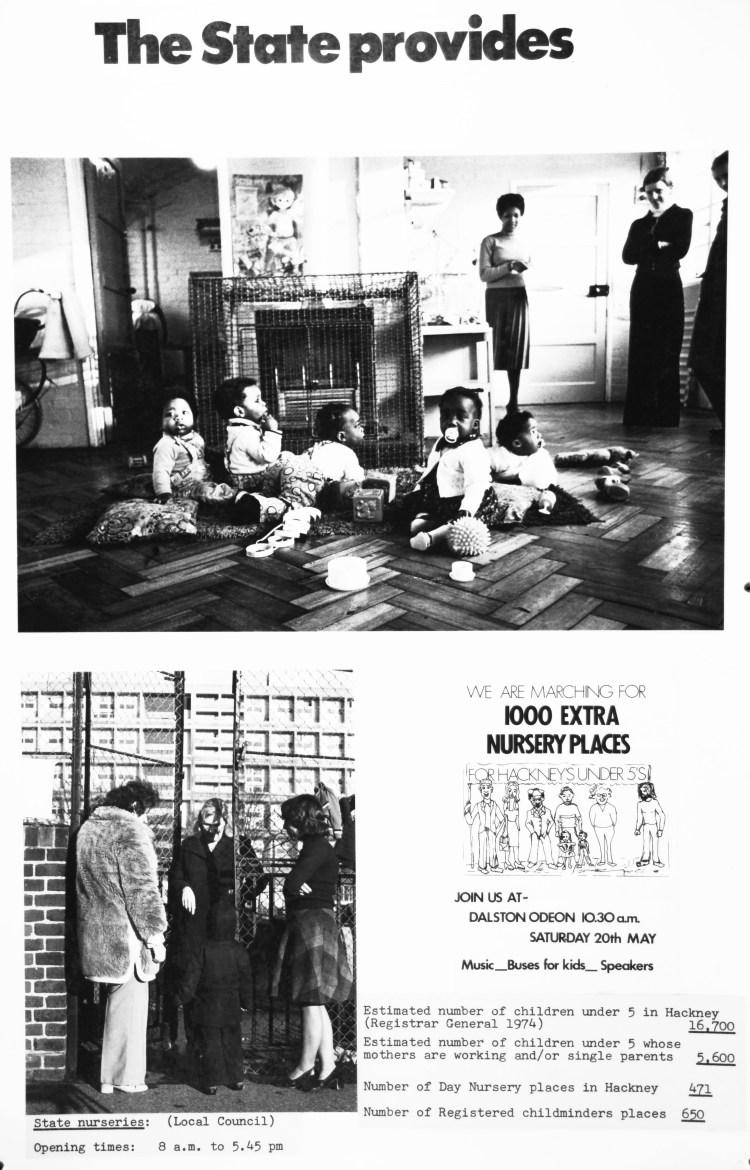
Panel with heading "The State provides" shows images of state nurseries and a flyer reading "We are marching for 1000 extra nursery places"

The laminated panels combined documentary photographs with statistics and text to show the available options for childcare, for example, the state provision of nurseries and private provision at home or by childminders.
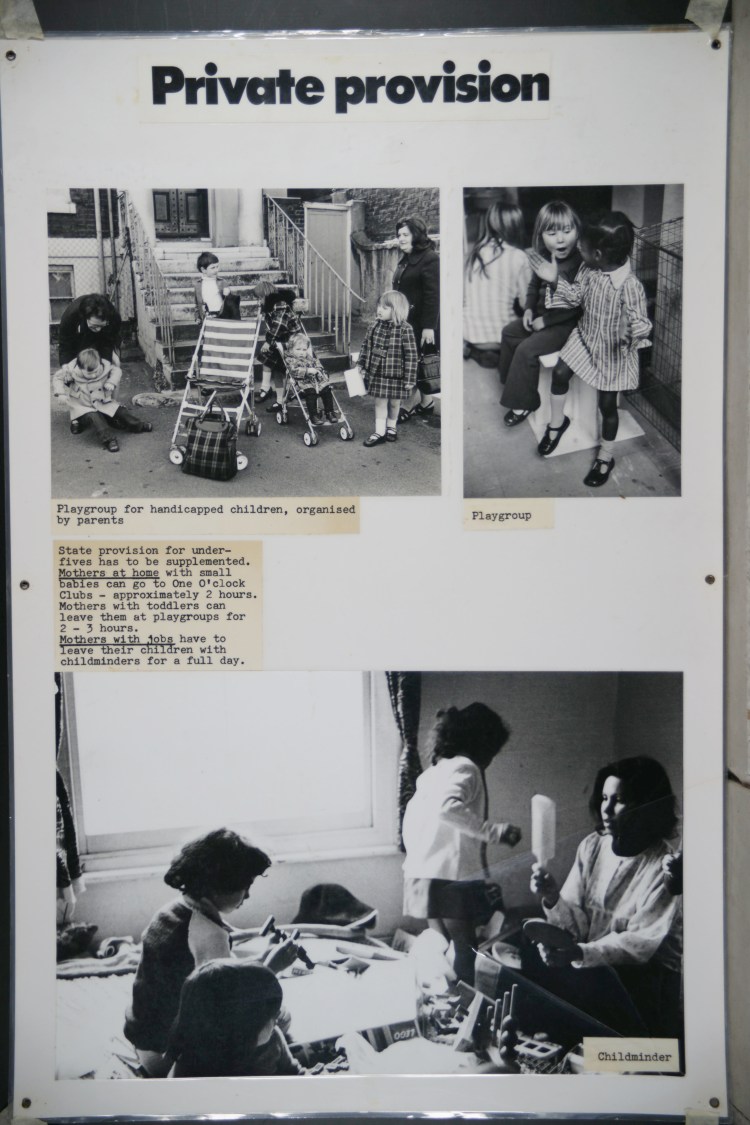
Panel reads "Private provision" and shows images of children being looked after in the homes of parents and childminders.
Many children were looked after at home or by childminders. ©Hackney Flashers

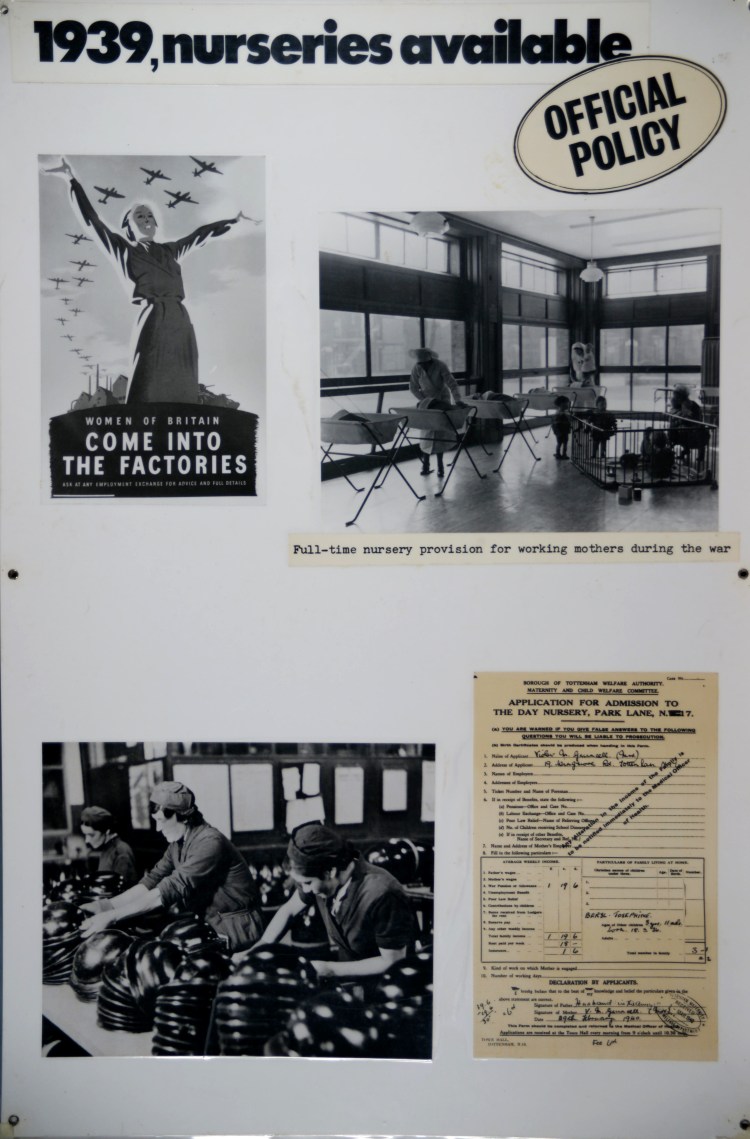
Panel reads "1939, nurseries available", and shows images of war-time nurseries, women working in facatories and a flyer reading "Come into the factories" with a drawing of a woman with her arms outstretched while war planes fly above.

Women needed childcare to be able to work, but although national childcare had been provided during the second world war so that women could work, the provision of childcare had since been cut.
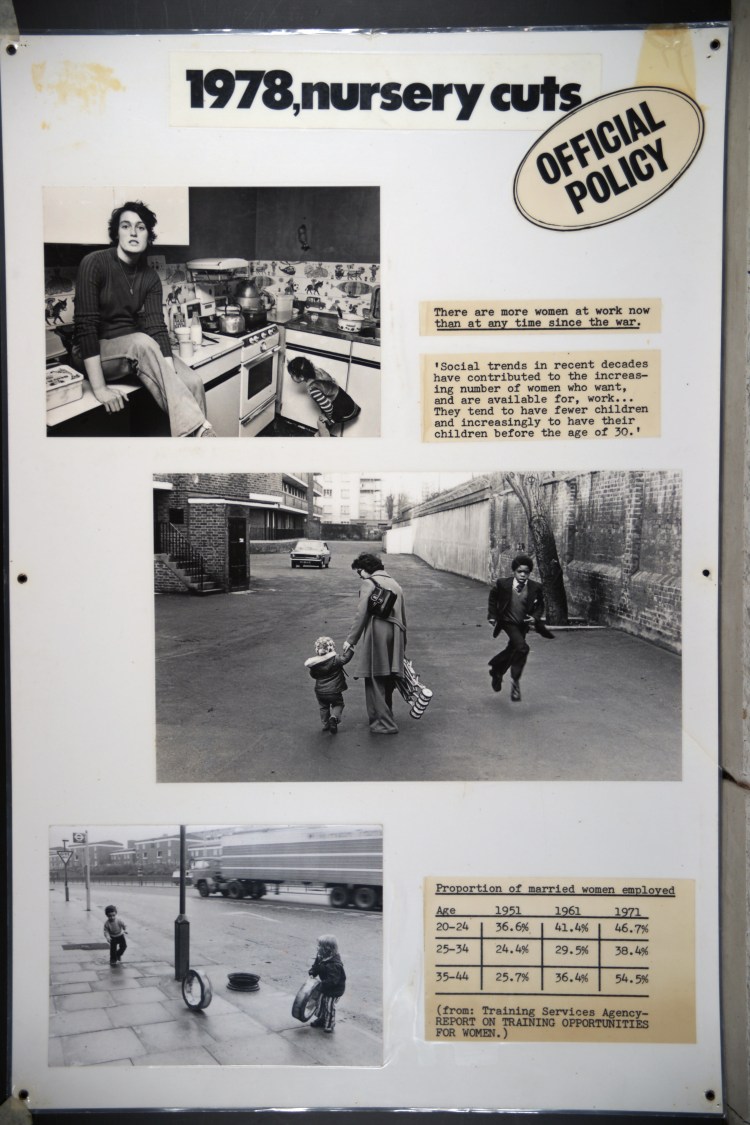
Panel reads "1978, nursery cuts" and shows images of a woman at home with a child, walking with a child and children playing with tyres on the street. Further text provides statistics on cuts.
While in the 1970s nursery provision was being cut. ©Hackney Flashers

The panels showed the gap between the existing childcare and the amount of childcare that was needed.
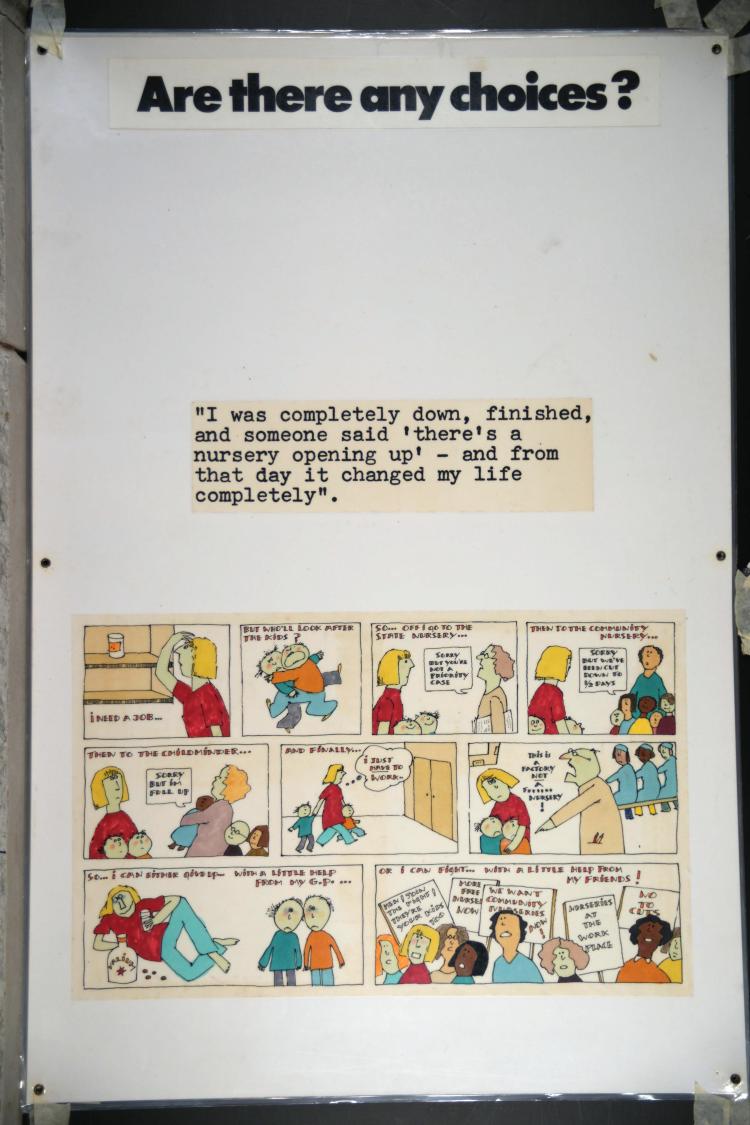
Panel reads "Are there any choices?" It shows a quote "I was completely down, finished, and someone said 'there's a nursery opening up' - and from that day it changed my life completely". A cartoon depicts a woman's story of trying to work and care for children. Ultimately she joins protests.
The contradictory situation that many women still face is that they need to work but can’t afford or find adequate childcare. ©Hackney Flashers

The contradictory situation that many women faced in the 1970s, and still face now, is that they need to work but can’t afford or find adequate childcare. The project attempted to highlight this problem but also to show that by actively campaigning for childcare women could take action to change the situation.
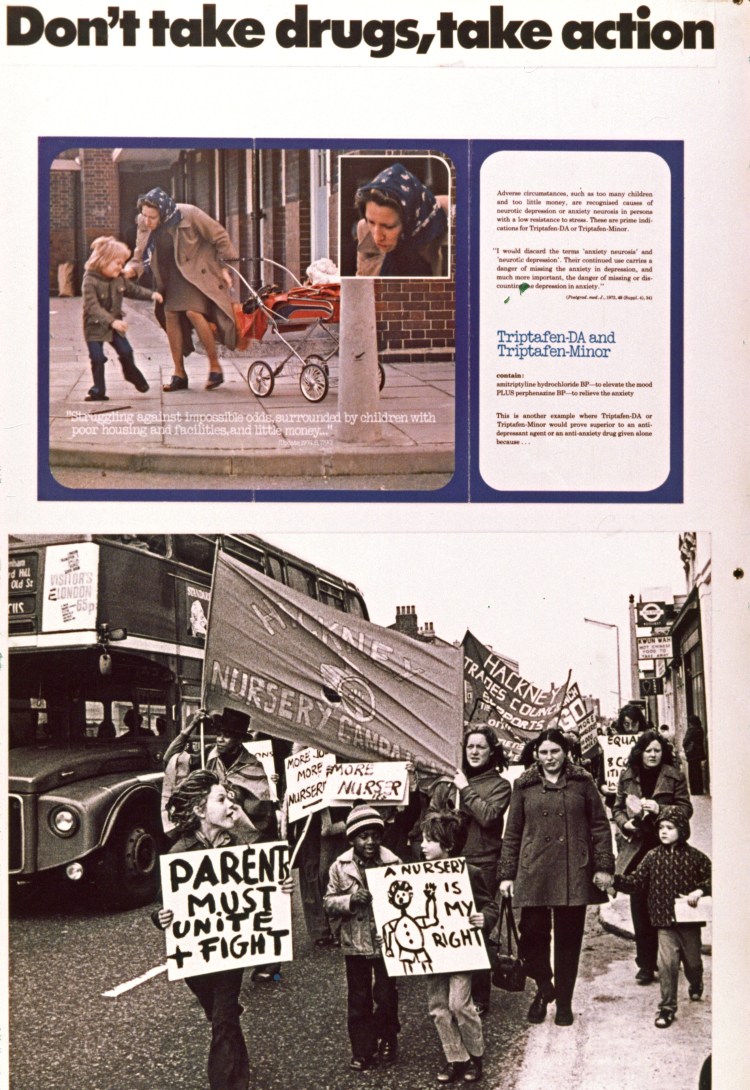
Panel reads "Don't take drugs take action" it shows an advert for an anti-depressant. The advert contains an image of a stressed mother pulling a child. This is juxtaposed with an image of women and children protesting for nursery provision.
Activism against the pressures women faced was proposed as an alternative to medication. ©Hackney Flashers

The project showed examples of community action and activism as alternatives to the medical emphasis on treating women’s stress and depression with tranquillisers.
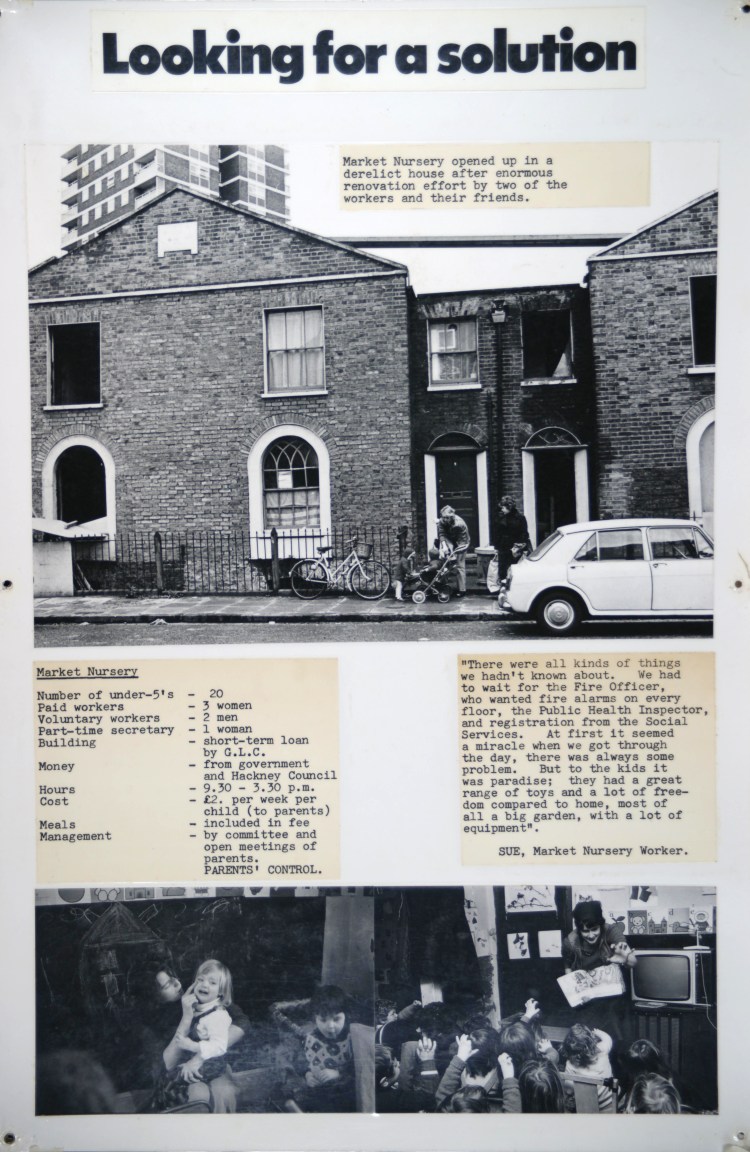
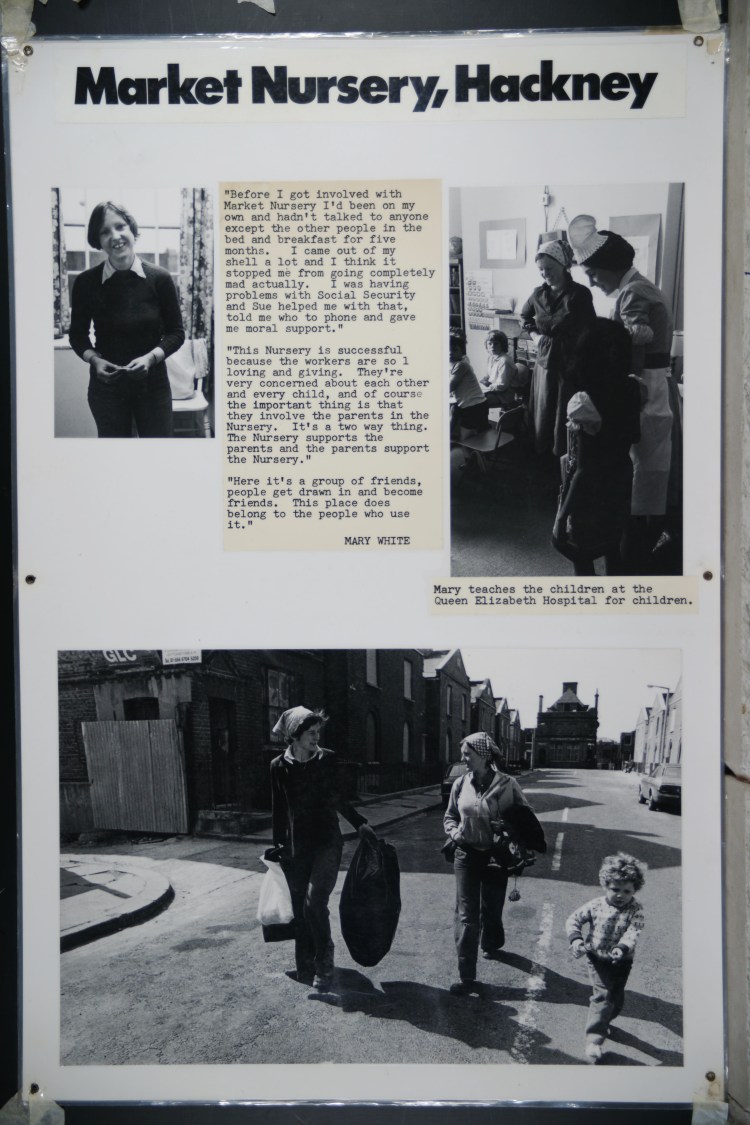
Panel reads "Looking for a solution and shows images of Market Nursery
A panel from ‘Who’s Holding the Baby’ suggested solutions for childcare. ©Hackney Flashers

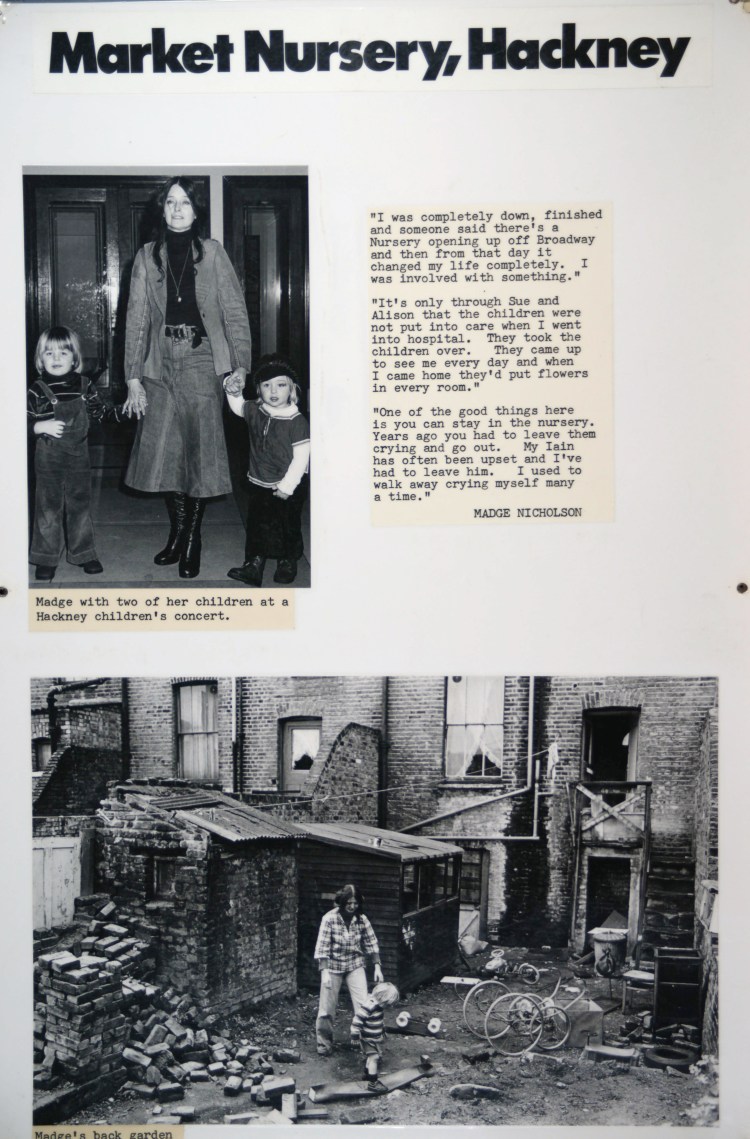
Community nurseries such as Market Nursery in Hackney were one example of an attempt to provide affordable childcare at the time.
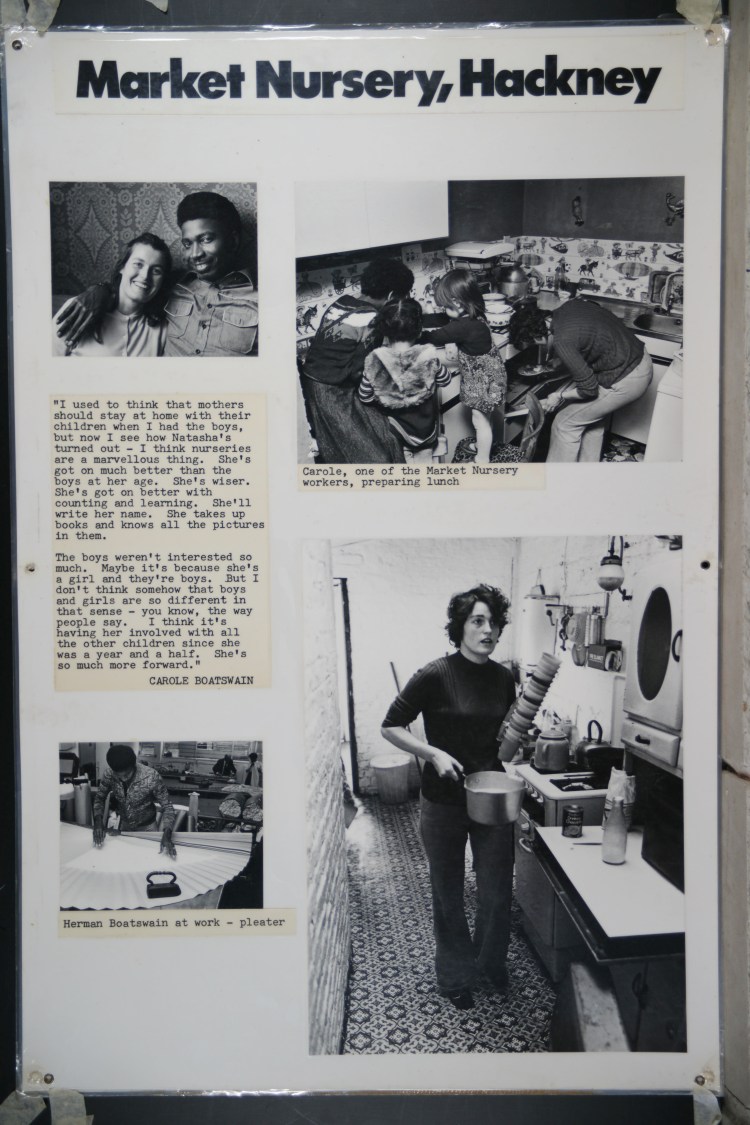
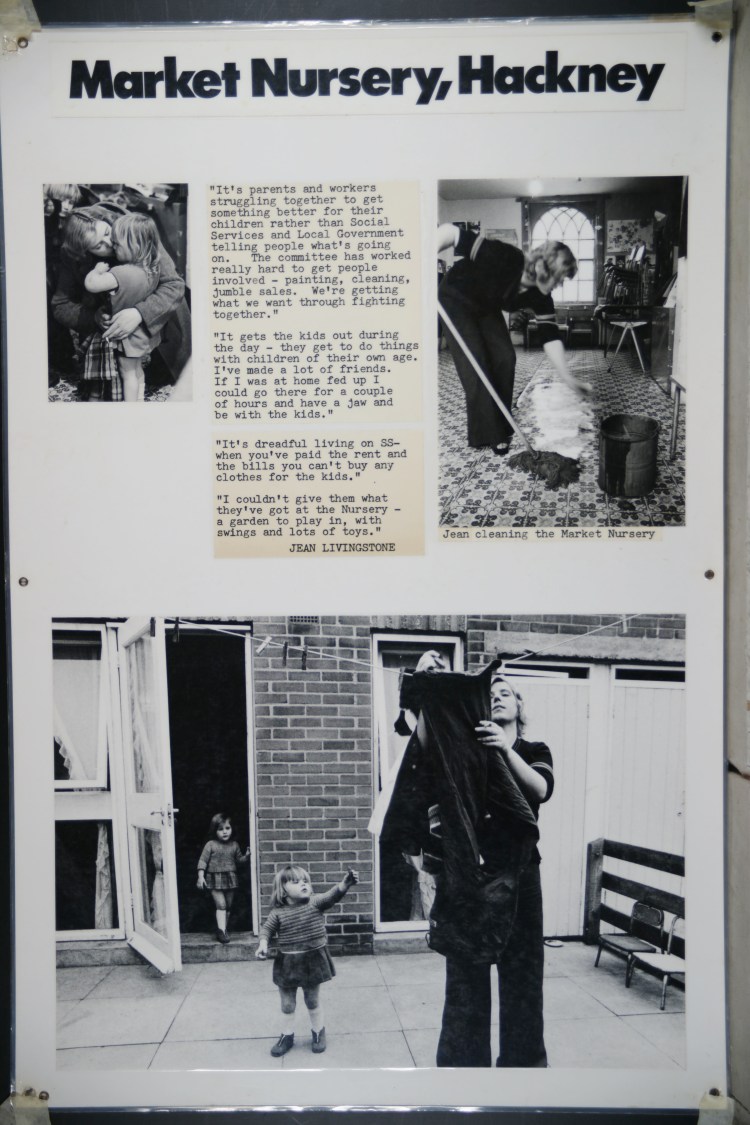
Panel reads "Market Nursery, Hackney" it shows a quote from a woman who uses the community nursery and photos of the nursery.
The group showed positive examples of childcare at Market Nursery. ©Hackney Flashers
Panel reads "Market Nursery, Hackney" it shows women tidying up and hanging up laundry at the nursery, plus text about it.
The group showed positive examples of childcare at Market Nursery. ©Hackney Flashers
Panel reads "Market Nursery, Hackney" and shows images and text about the nursery.
The group showed positive examples of childcare at Market Nursery. ©Hackney Flashers
Panel from 'Who's Holding the Baby?' 1978 ©Hackney Flashers
Some panels showed community answers to the lack of provision. ©Hackney Flashers
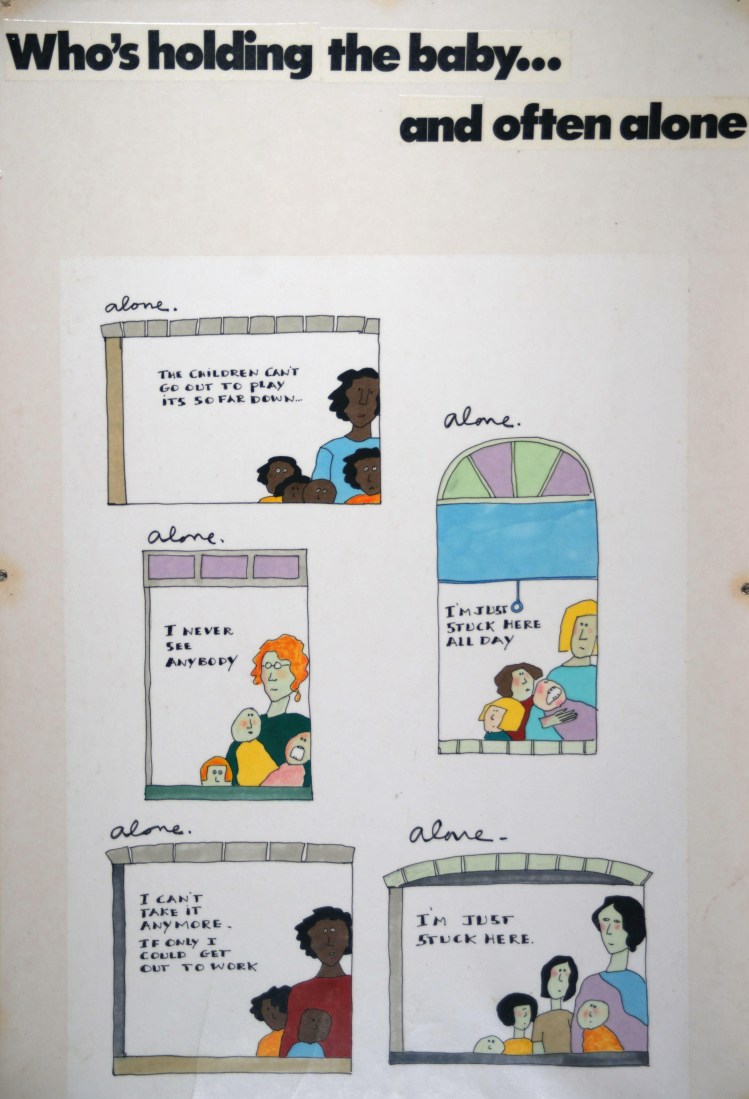
Panel reads "Who's holding the baby.. and often alone. Cartoon panelw with drawings of women and children read, "The children can't go out to play, it's so far down." "Alone". "I never see anybody." "Alone". "I'm just stuck here all day" "Alone". "I can't take it anymore. If only I could get out to work". "Alone". "I'm just stuck here."
Cartoons by collective member Christine Roche showed isolation experienced by mothers. ©Hackney Flashers

Community nurseries could only provide care for a small number of children, many more were isolated and alone. Seeing that photography could not always shed light on the many women who were hidden and isolated the group also used cartoons by illustrator and collective member Christine Roche to show the isolation experienced by mothers.

The collective also highlighted the treatment of women’s isolation in mainstream magazines and the tabloid press and put it in a wider context.
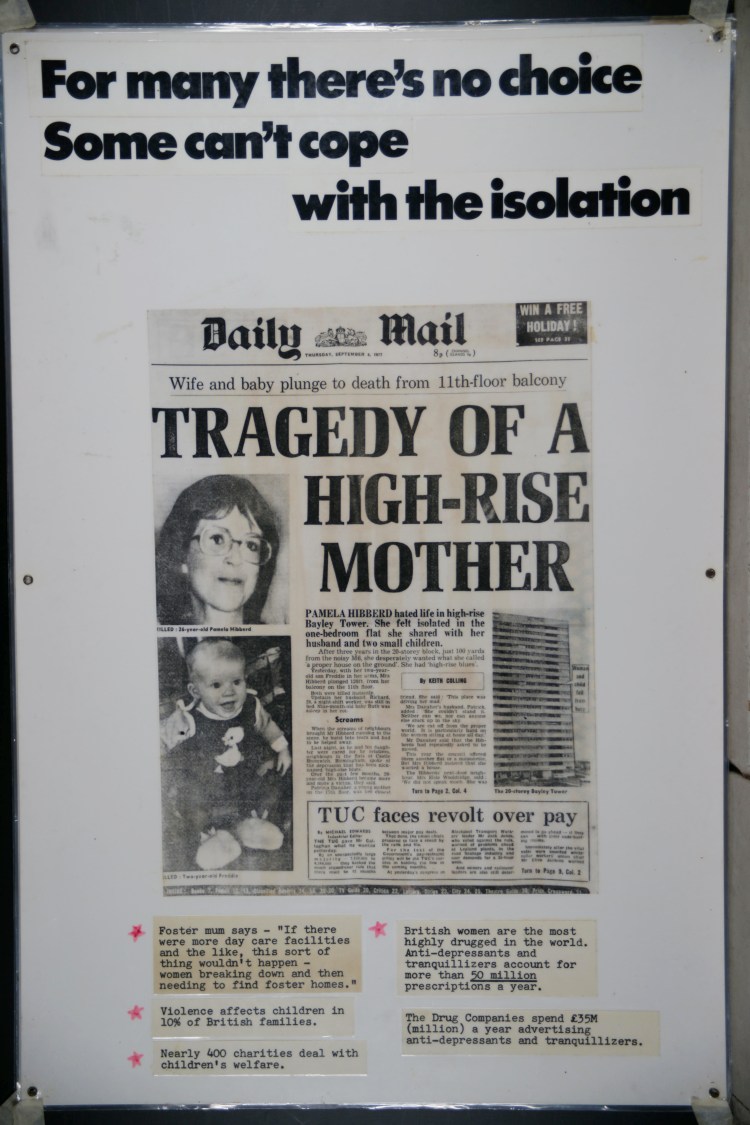
Panel reads "For many there's no choice. Some can't cope with the isolation." A Daily Mail front page reads "Tragedy of a High Rise Mother".
Some panels explored the isolation faced by mothers
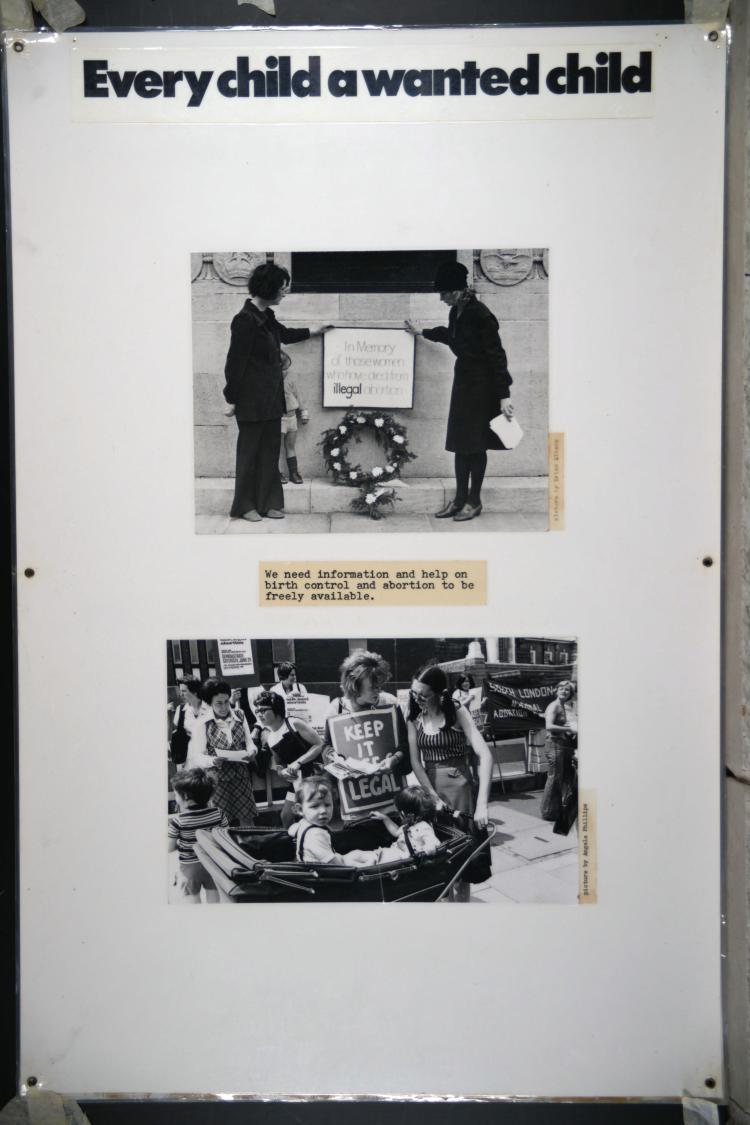
Panel reads "Every child a wanted child" and shows pro-choice protests for access to safe legal abortion.
Campaigns for freedom of choice of contraception and abortion were a central aspect of the women’s movement in the 1970s. ©Hackney Flashers

Enabling women to make free choices about motherhood was at the heart of the campaign for freely available contraception and abortion which was an important aspect of feminism in the 1970s.
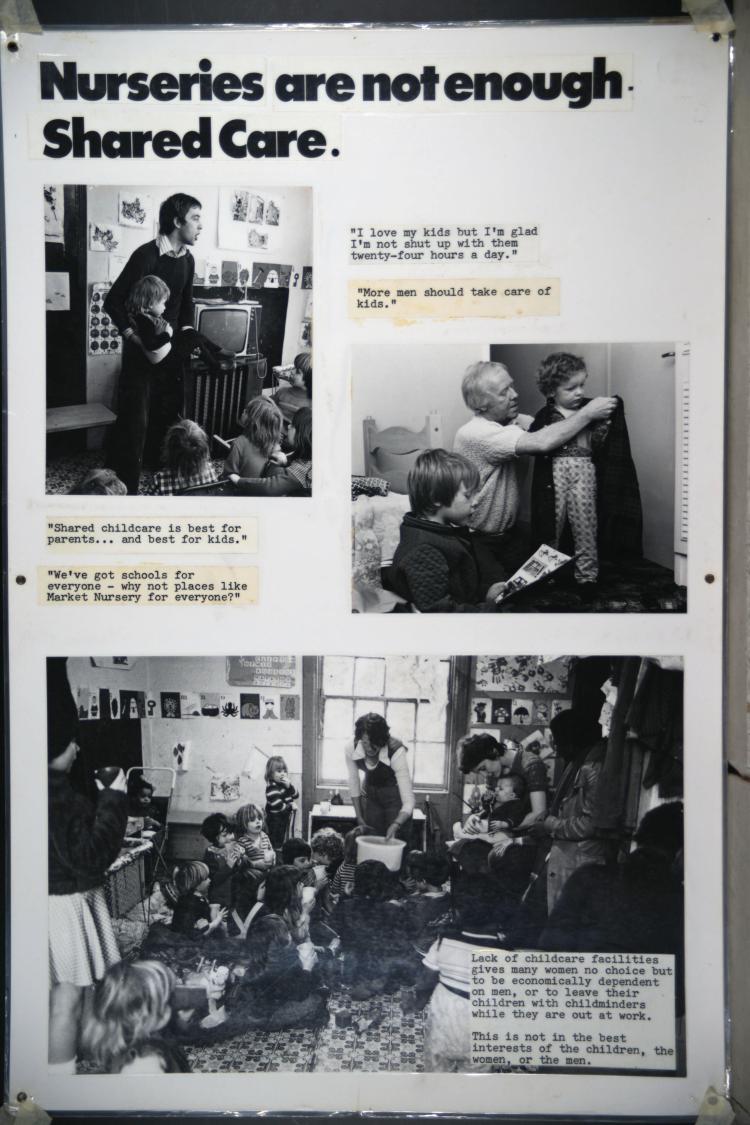
Panel reads "Nurseries are not enough. Shared care." and shows images of men involved in childcare.
The group pointed out that men needed to take a role in childcare. ©Hackney Flashers

The idea that a woman should always be the main carer of children was also being challenged at the time. It was argued that men needed to take a full role in childcare.
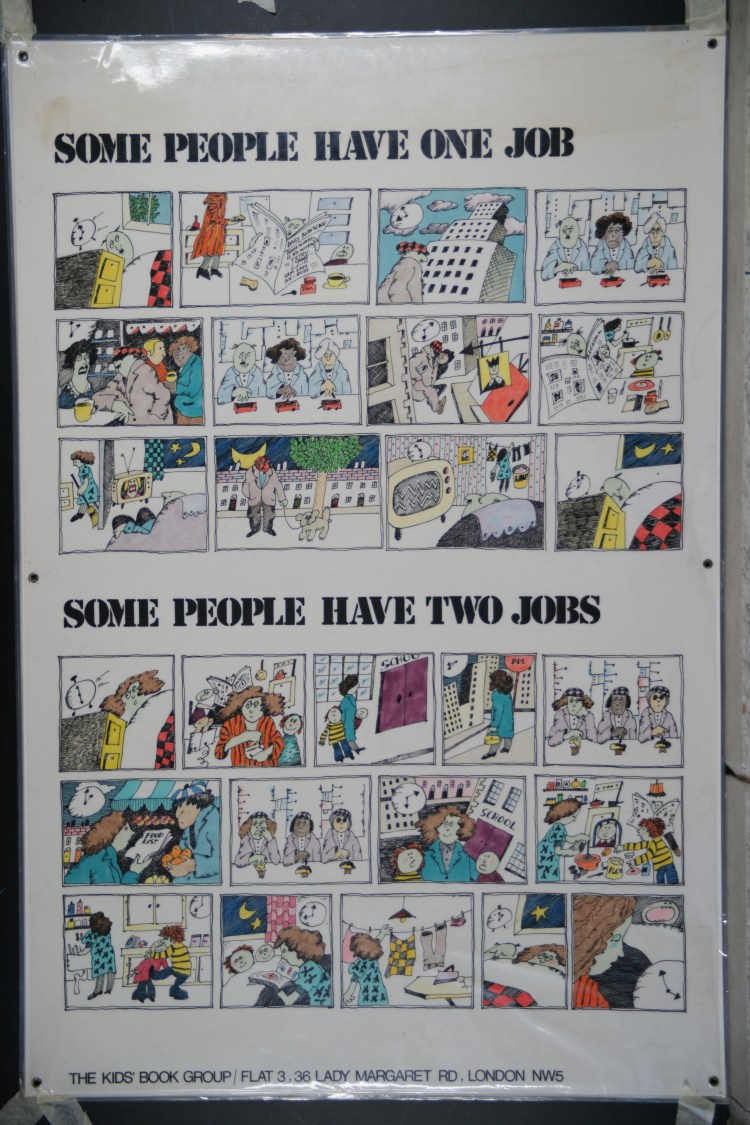
Panel reads "Some people have one job, some people have two jobs". Cartoon panels show the work women do in and out of the home.
Doing the housework, shopping, childcare and paid work outside the home put increasing pressure on women. ©Hackney Flashers

Childcare was and still is a different experience for women of different classes.
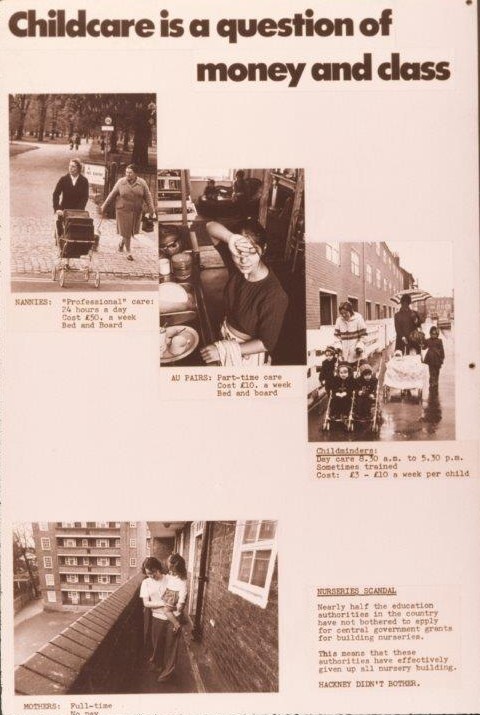
Panel reads "Childcare is a question of money and class" and shows images of working class women caring for children, compared to professional nannies looking after the children of wealthier families.
The experience of working-class women was highlighted in the panels. ©Hackney Flashers
Panel reads "Who's Holding the Baby ... and where?" and shows images contrasting wealthy home life with working class life.
Childcare was and still is a different experience for women of different classes. ©Hackney Flashers

The group began to use montage techniques, using images cut from magazines to work on questioning the multiple roles that women and mothers juggled and how they were represented in the media and society.
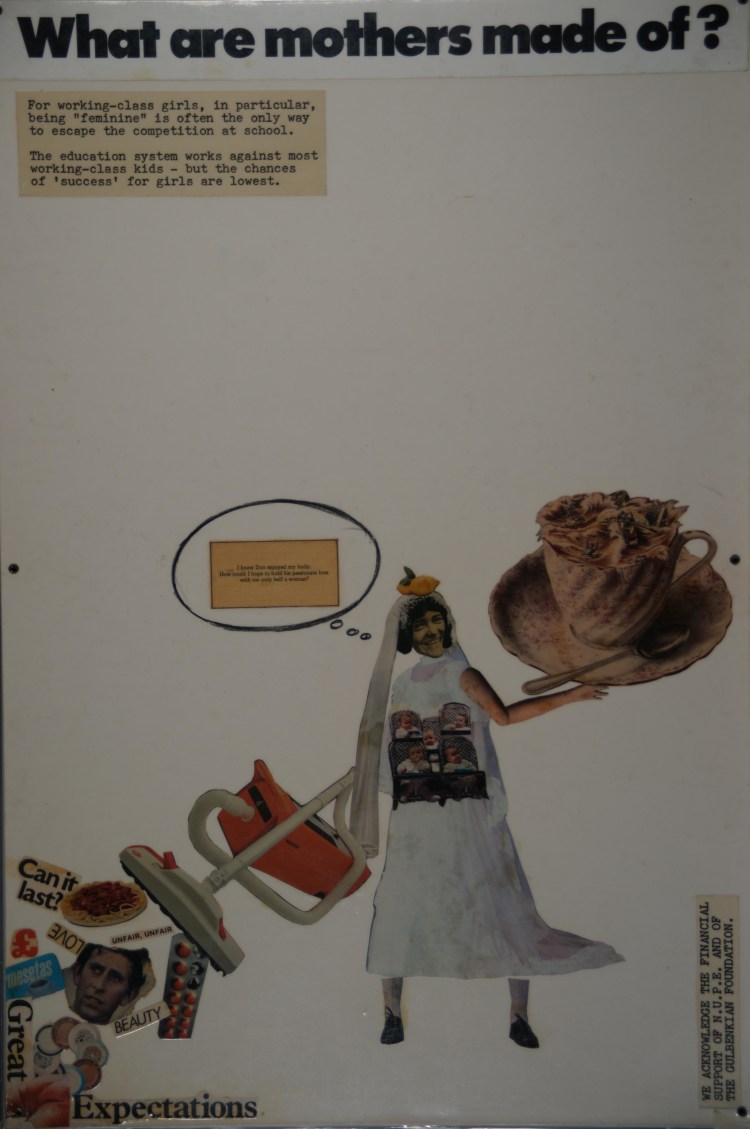
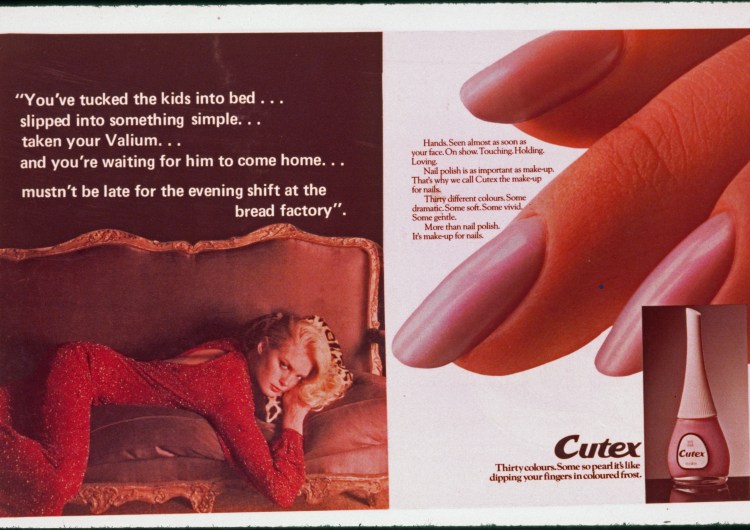
Panel reads "What are mothers made of" a photomontage shows a woman in a wedding dress holding a vacuum cleaner and a large cup and saucer.

Cutex photomontage by the Hackney Flashers. A 1970s luxurious beauty advert for nail polish is juxtaposed with text about the stress of a woman's life. The text reads "You've tucked the kids into bed... slipped into something simple... taken your Valium.. and you're waiting for him to come home... mustn't be late for the evening shift at the bread factory".
A photomontage by the Hackney Flashers collective
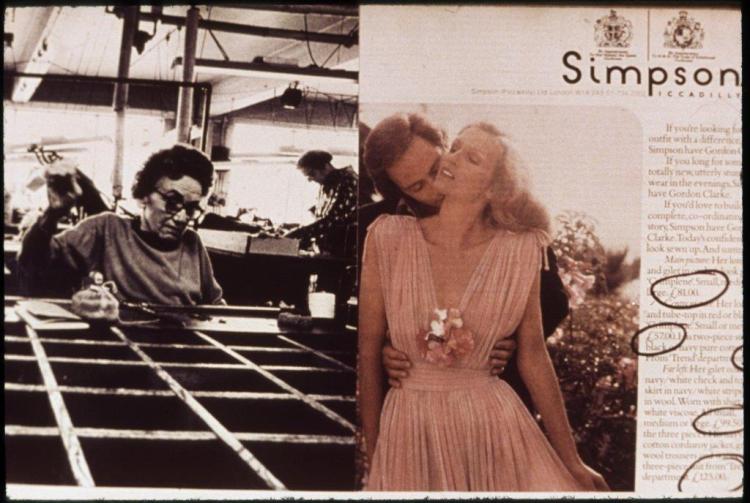
Montage juxtaposing glamorous clothing brand advertising with the factory conditions where the dress shown was made
A montage juxtaposed glamorous advertising with the factory conditions where the dress shown was made. ©Hackney Flashers

And in this panel montage juxtaposed glamorous advertising with the factory conditions where the dress being advertised was made.

See our Archive for material relating to the production of the work and its display at the Hayward Gallery and the many other venues where it toured. All images ©Hackney Flashers.